
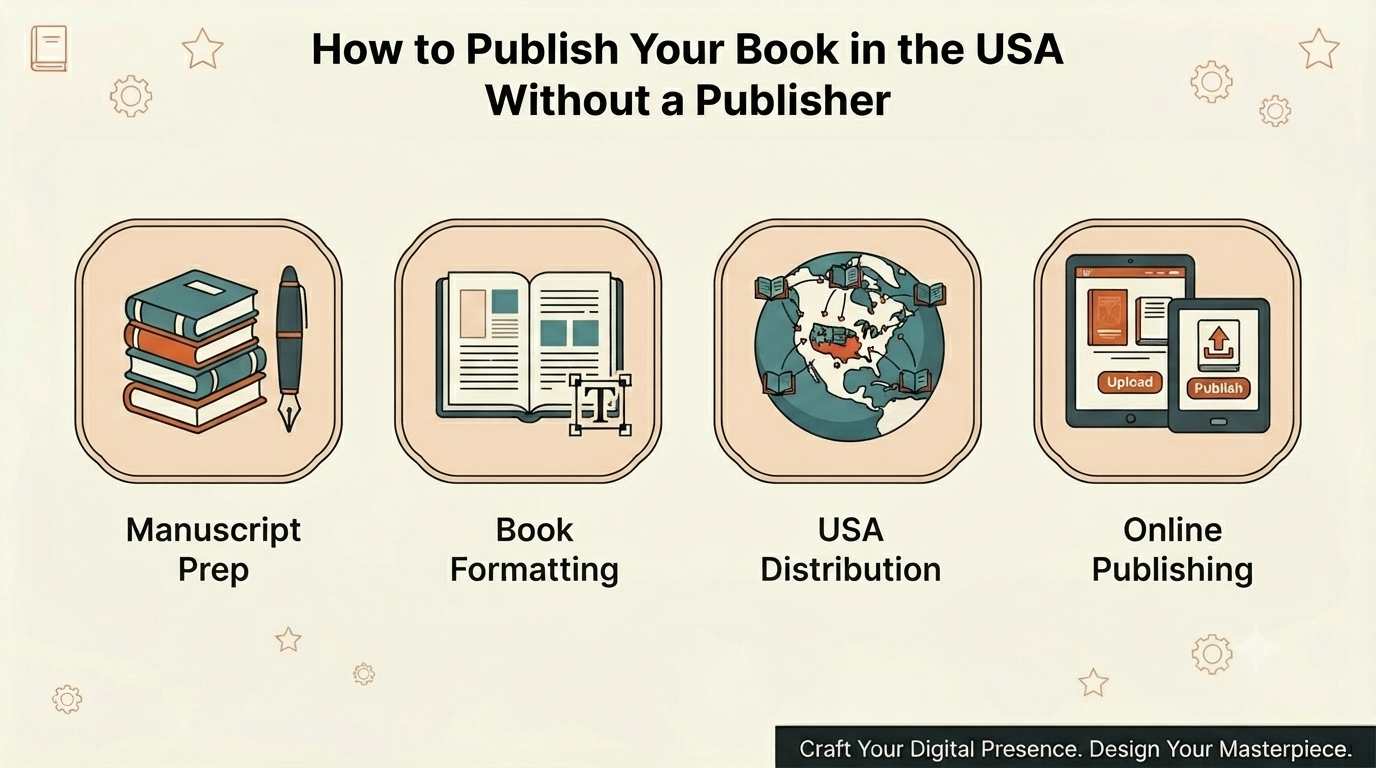
Step-by-Step Guide to Publishing Your Book in the USA Without a Publisher
At Elite Global Writers, we work with authors at every stage of the writing and publishing journey, and one trend has become unmistakably clear: self-publishing is no longer a fallback option for writers who could not secure a traditional deal. It has become a legitimate, often preferable, path for authors who want creative control, faster timelines, and a greater share of their book's earnings.
Understanding the Shift Toward Independent Publishing
The publishing industry has undergone a significant transformation over the past two decades. What was once a tightly controlled gateway, dominated by a small number of major publishing houses, has opened up into a diverse ecosystem where independent authors can compete directly alongside traditionally published books.
This transformation matters because it fundamentally changes the power dynamic between writers and the publishing industry. Authors are no longer dependent on convincing a literary agent and an acquisitions editor that their book is commercially viable enough to justify a publishing contract. Instead, writers can make that determination for themselves, taking their work directly to readers and allowing the market to respond.
Step One: Finalizing a Polished, Publication-Ready Manuscript
Before any discussion of platforms, formatting, or marketing can begin, the foundation of a successful self-published book is a manuscript that has been thoroughly developed, revised, and professionally edited. Readers today have countless options when choosing what to read next, and a manuscript filled with structural issues, inconsistent pacing, or unresolved plot holes will struggle to compete, regardless of how well it is marketed.
The revision process should typically involve multiple passes through your manuscript, ideally with time between drafts to allow you to return to your work with fresh eyes. Many successful independent authors also rely on beta readers during this stage, gathering honest feedback from a small group of trusted readers who can identify pacing issues, confusing sections, or inconsistencies that the author may have missed after spending so much time immersed in the material.
Once structural revisions are complete, professional editing becomes essential. This typically includes developmental editing, which addresses big-picture issues like plot structure, character development, and overall narrative flow, followed by copyediting, which focuses on grammar, sentence structure, and consistency. A final proofreading pass should catch any remaining typos or formatting errors before the manuscript moves toward publication. Skipping professional editing is one of the most common mistakes new self-published authors make, and it is often the difference between a book that reads as polished and professional versus one that feels amateurish, regardless of how strong the underlying story or content may be.
Step Two: Designing a Cover That Meets Professional Standards
Book cover design plays an outsized role in a self-published book's success, particularly because readers form snap judgments about a book's quality and genre within seconds of seeing its cover, whether browsing online or in person. A cover that looks unprofessional, regardless of how strong the writing inside may be, can severely limit a book's commercial potential.
Professional cover design typically involves understanding genre conventions, since readers have come to expect certain visual cues that signal what type of book they are looking at. A thriller cover, for example, looks dramatically different from a cover for a cozy mystery or a literary memoir, and readers often subconsciously rely on these visual signals when deciding whether a book matches what they are looking for.
Many self-published authors choose to work with freelance cover designers who specialize in book design, rather than attempting to create covers themselves using general design software. While this represents an upfront investment, a professional cover significantly increases a book's perceived value and competitiveness in a crowded marketplace. Authors should also ensure their cover design meets the specific technical requirements of whichever publishing platforms they plan to use, including correct dimensions, resolution, and file formats for both print and digital editions.
Step Three: Choosing the Right Self-Publishing Platform
Once your manuscript and cover are publication-ready, the next major decision involves choosing which self-publishing platforms to use for distribution. Several major platforms dominate the self-publishing landscape in the United States, each offering distinct advantages depending on an author's goals.
Amazon Kindle Direct Publishing remains the most widely used platform among self-published authors, largely because of Amazon's dominant position in both e-book and print book sales. KDP allows authors to publish both e-books and paperback editions, with print-on-demand technology eliminating the need for authors to manage physical inventory. Royalty structures, distribution reach, and integration with Amazon's massive customer base make this platform a logical starting point for most independent authors.
Many successful authors choose to use multiple platforms simultaneously, publishing through Amazon KDP for primary sales while also using IngramSpark or similar services to expand distribution to additional retailers and library systems. This multi-platform approach maximizes a book's reach without requiring authors to choose just one distribution channel.
Step Four: Understanding ISBNs, Copyright, and Legal Considerations
Navigating the legal and administrative side of self-publishing is an essential step that many first-time authors overlook or misunderstand. An International Standard Book Number, commonly known as an ISBN, is a unique identifier required for books sold through most retail and library channels. In the United States, ISBNs are issued through Bowker, the official ISBN agency, and authors can choose to purchase their own ISBNs or use free ISBNs provided by certain self-publishing platforms.
While free ISBNs offered by platforms like Amazon KDP can simplify the publishing process, they typically list the platform as the publisher of record rather than the author's own imprint. Many independent authors who want to establish their own publishing identity choose to purchase their own ISBNs, allowing them greater control and a more professional, independent publishing presence.
Step Five: Formatting Your Manuscript for Print and Digital Editions
E-book formatting involves a different set of considerations, since e-books must be formatted to display properly across a range of devices and screen sizes, from smartphones to dedicated e-readers.
While some authors with technical skills choose to handle formatting themselves using available software and templates, many self-published authors opt to hire professional formatting services, particularly for more complex manuscripts that include images, charts, or unconventional layouts. Investing in proper formatting helps ensure your finished book looks professional and reads smoothly, regardless of how readers choose to access it.
Step Six: Setting Strategic Pricing for Your Book
Pricing strategy is a critical, and often underestimated, component of successful self-publishing. Setting your book's price too high can discourage potential readers, particularly first-time readers unfamiliar with your work, while pricing too low can undervalue your book and reduce your overall royalty earnings.
Researching comparable titles within your genre provides valuable insight into reader expectations and competitive pricing. E-books in most genres tend to be priced lower than print editions, reflecting reader expectations around digital content pricing, while print books, particularly those with higher production costs, are generally priced higher to account for printing expenses.
Step Seven: Building an Author Platform Before and After Launch
One of the most significant differences between traditional publishing and self-publishing is the level of responsibility authors carry for marketing and audience building. Traditional publishers typically provide some degree of marketing support, though even that support has diminished significantly in recent years. Self-published authors, by contrast, are almost entirely responsible for building their own audience and driving awareness of their book.
Building an author platform should ideally begin well before your book's official launch date. This includes establishing a professional author website, building an email list of interested readers, and developing a presence on social media platforms where your target readers are most active. Consistently sharing content related to your writing process, your book's themes, and your personal author journey helps build genuine connection with potential readers long before they ever make a purchase.
Step Eight: Generating Early Reviews and Social Proof
Reader reviews play an outsized role in a self-published book's long-term success, both because they influence potential readers' purchasing decisions and because they affect how prominently a book appears within platform algorithms like Amazon's search and recommendation systems. Books with a strong number of positive reviews tend to receive significantly more visibility than those with few or no reviews.
Generating early reviews typically involves reaching out to beta readers, advance reader copy recipients, and members of your existing author platform, inviting them to read and review your book around its launch date. Many authors distribute free or discounted advance copies specifically to generate this early wave of reviews, helping establish credibility and social proof before the book reaches a broader audience.
Step Nine: Marketing Your Book Through Multiple Channels
Effective book marketing for self-published authors typically involves a combination of organic and paid strategies working together. Organic strategies include consistent social media engagement, guest appearances on relevant podcasts, participation in online communities, and ongoing content marketing through blogs, newsletters, or video content related to your book's subject matter.
Many self-published authors also benefit from participating in book promotion services and platforms that specialize in connecting readers with discounted or free e-books, particularly during launch periods or promotional campaigns. These services can provide a meaningful boost in visibility and download numbers, particularly when combined with a broader, sustained marketing strategy rather than relying on a single promotional push.
Step Ten: Planning for Long-Term Success Beyond Launch Day
One of the most common mistakes new self-published authors make is treating their book's launch date as the finish line, rather than the beginning of an ongoing marketing and audience-building process. Successful self-published authors understand that consistent, long-term effort, rather than a single intense launch push, typically drives sustainable sales and audience growth over time.
Many successful independent authors also revisit and refine their marketing strategies periodically, analyzing what channels and messaging have proven most effective and adjusting their approach accordingly. This ongoing commitment to learning and adaptation often distinguishes authors who achieve sustained success from those who experience only a brief initial spike in sales before their book's visibility fades.
Common Mistakes to Avoid When Self-Publishing in the USA
Even motivated, talented authors can undermine their self-publishing success by falling into a few common, avoidable mistakes. Rushing the editing process is among the most damaging, as readers are quick to notice and react negatively to manuscripts filled with grammatical errors or inconsistent storytelling. Investing adequate time and resources into professional editing remains one of the most important steps in the entire self-publishing process.
Underinvesting in cover design is another frequent misstep. Many authors, particularly those working with limited budgets, attempt to design their own covers without the necessary design expertise, resulting in covers that fail to meet professional genre standards and ultimately limit a book's commercial appeal.
Failing to build an author platform before launch is a third common mistake. Authors who wait until their book is published to begin building an audience often struggle to generate meaningful early momentum, since there is no existing audience ready and waiting to support the launch. Building this platform well in advance significantly improves a book's chances of a successful, well-supported launch.
How Elite Global Writers Supports Authors Through the Self-Publishing Journey
At Elite Global Writers, we understand that self-publishing, while empowering, can also feel overwhelming for authors navigating this process for the first time. From manuscript development and professional editing to cover design, formatting, and marketing strategy, every stage of the self-publishing journey involves important decisions that directly impact a book's ultimate success.
Our team works closely with authors throughout the United States, providing professional support tailored to each writer's specific goals, genre, and target audience. Whether you are working on your very first book or looking to refine your approach after a previous self-publishing experience, we are committed to helping you navigate this process with confidence, ensuring your finished book meets the professional standards needed to compete successfully in today's marketplace.
Final Thoughts on Publishing Your Book Without a Publisher
Publishing your book in the USA without a traditional publisher is no longer a compromise or a fallback option. It is a legitimate, increasingly popular path that offers authors creative control, faster timelines, and a greater share of their book's financial success. From finalizing a polished manuscript and securing professional editing, to choosing the right distribution platforms and building a sustainable marketing strategy, each step in this process plays a meaningful role in your book's ultimate success.
While self-publishing requires authors to take on responsibilities traditionally handled by publishing houses, it also offers unprecedented freedom and opportunity for writers who are willing to approach the process strategically and professionally. With careful planning, quality execution, and sustained effort, independent authors throughout the United States are proving that exceptional books can reach readers successfully without ever needing a traditional publishing deal.
Frequently Asked Questions
Q: Do I need an ISBN to self-publish my book in the USA?
A: While some platforms offer free ISBNs, purchasing your own ISBN through Bowker allows you to be listed as the publisher of record, offering greater control over your independent publishing identity.
Q: How much does it typically cost to self-publish a book?
A: Costs vary widely depending on the level of professional editing, cover design, and formatting services an author chooses to invest in, but most self-published authors budget for professional editing and cover design as essential expenses.
Q: Can I sell my self-published book in physical bookstores?
A: Yes, particularly when using distribution platforms like IngramSpark, which provide access to a wider network of bookstores and libraries beyond online retailers alone.
Q: How long does the self-publishing process typically take?
A: Timelines vary depending on manuscript readiness and the scope of editing, design, and formatting needed, but many authors complete the process within a few months once their manuscript is finalized.
If you are ready to take control of your publishing journey and bring your book to readers across the USA, Elite Global Writers is here to help you navigate every step of the process with confidence and professional support.